
If all your marketing is measurable, you’re playing it too safe
Ask a roomful of marketers what makes a successful campaign and chances are someone will mention ROI within the first few seconds. And that’s fair enough. Marketing costs money and companies want to know what they’re getting for it.
But somewhere along the way, measurability stopped being a useful tool and became the whole point. If it can’t be tracked, attributed and dropped into a monthly or quarterly report, it apparently doesn’t count. And we’d argue that is one of the most expensive mistakes a brand can make.
In fact, we would go as far as to say, that if the only marketing you’re doing is measurable, then you’re probably not doing enough.
Why? Read on to find out.
We need to talk about the metrics trap
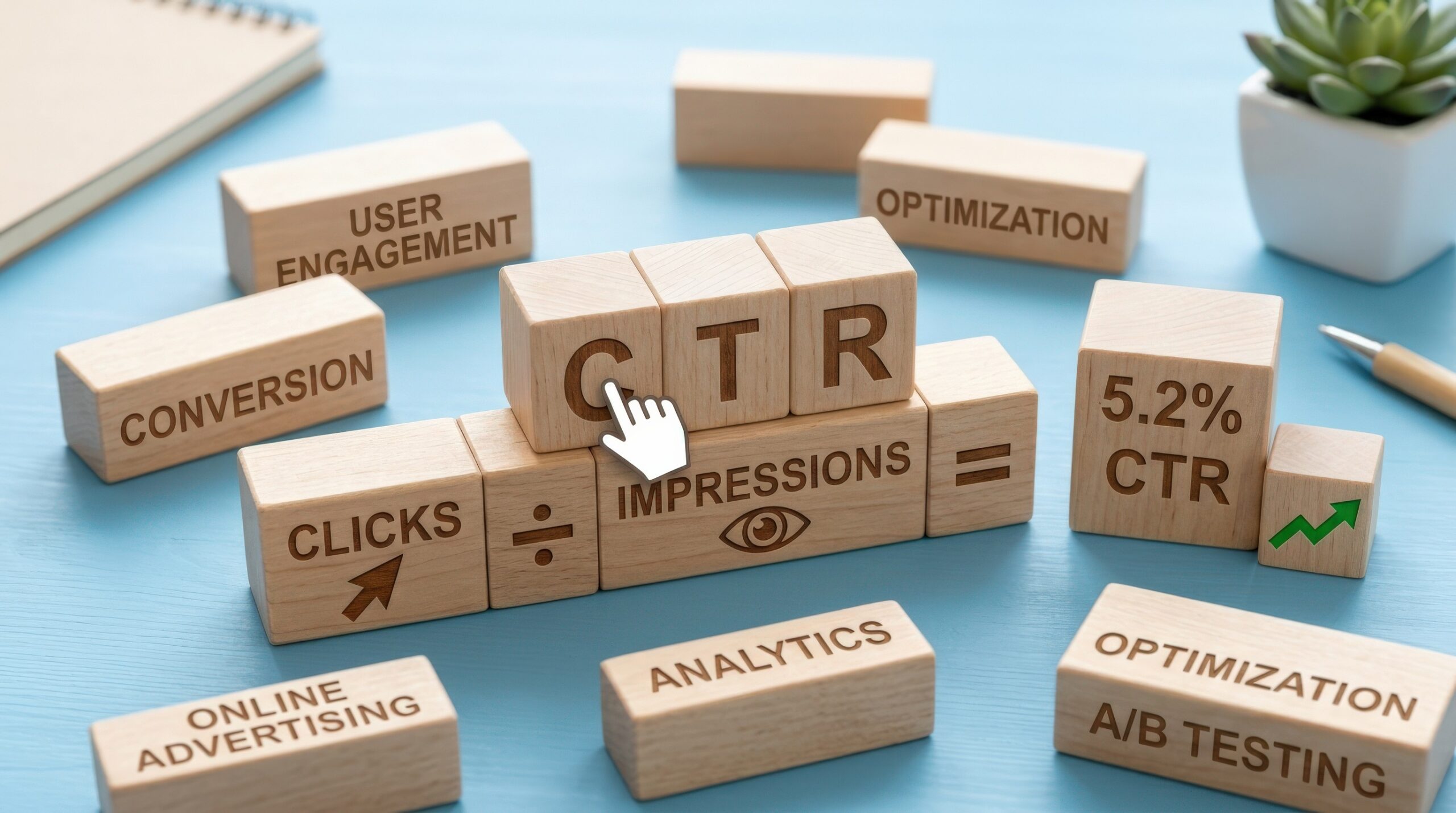
ROI. CTR. ER (return on investment; click through rate; engagement rate)
Marketing loves an acronym, especially if it provides figures to add into a spreadsheet. And while it would be remiss of us to suggest measuring marketing activity isn’t important, it shouldn’t be the be all and end all.
The problem is it’s easy to get blindsided into thinking some stats are important, when in fact, they’re not. So what if a social media post drove 400 people to your website? The real question should be what did they do once they reached there? Did they look at more than one page? Did they sign up for your newsletter? Did they buy anything?
And as for the number of followers, fans, etc. Do you remember when Facebook first launched, and we all felt like abject failures, as our friends had 900 friends, and we only had 10? And that subsequent smug feeling when we realised their 900 friends weren’t friends at all?
Well, that also holds true for businesses. Yes, more followers does mean your content could potentially reach more people, but the number alone means nothing without understanding if these followers are worthwhile, genuine and likely to buy what you’re selling.
And this obsession with data and stats is feeding into the tendency to only invest in marketing activity, which is easy to measure, easy to explain and therefore easy to justify.
This is partly down to the sway other departments have over marketing, such as finance, who demand activity has a direct and clearly quantifiable impact on revenue and customer acquisition, in other words an ROI.
But it’s also partly down to living in a society that thrives and rewards immediacy, whether that’s same-day delivery, 24/7 news coverage or people being constantly available. As a result, marketeers are increasingly focusing on activity which delivers immediate results, hence the fixation on marketing’s holy grail – going viral. Although, as we found, going viral isn’t all it’s cracked up to be.
And while measurement is important, some marketeers are under the misguided impression that marketing which isn’t measurable, isn’t valuable. They couldn’t be more wrong.
Total measurability be damned
“If this campaign doesn’t drive a marked increase in sales by the end of this month, then it will have failed.”
This black and white view of how marketing works isn’t anything new, as marketing has always been dogged by this kind of naïve thinking.
But the thing is, marketing activity doesn’t just work at a data and stats level. It also works at a human level, speaking to someone’s subconscious. How else would you explain our belief that a more expensive product is probably a more trusted solution or that waiting longer for something means it must be more worthwhile?
Rory Sutherland, advertising executive and vice chair of Ogilvy & Mather argues that the drive for measurability strips out everything that makes marketing effective.
To use his analogy: an engineer would look at a bumblebee and conclude it shouldn’t be able to fly.
In other words, by only focusing on what is measurable, you’re missing out on where the magic really lies. Break the rules, create emotion – even if it’s hard to measure.
It’s what Guinness did with their Surfer ad. It had almost nothing to do with the product and you’d struggle to calculate how many extra pints it sold, but it did something more powerful – reframed the perceived weakness of how long it takes to pour a Guinness and turned it into a brand virtue.
Be foremost, not forgotten
And then there’s the concept of ‘mental availability’. Initially presented by Byron Sharp in his book ‘How Brands Grow’, it refers to the likelihood of a buyer considering your brand when they need to make a purchase. For example, if you see a car ad on TV, it’s unlikely you will go out the next day and buy one. However, when you are ready to purchase, which could be several months down the line, you will automatically think of that brand and not necessarily research other options.
This highlights the importance of brand salience built over time. While brand awareness ensures people recognise your name, salience ensures you are top-of-mind when they are ready to buy. So, while the OOH campaign you ran last month may not have achieved the immediate results you (and finance!) wanted, it may well have helped raise brand salience which in turn could contribute to sales down the line.
And that’s what people tend to forget about marketing. Short-term activations are great; but it’s brand building that’s key. It’s why Adidas, Coca-Cola and Visa are all sponsoring this year’s Football World Cup. It’s why companies exhibit at trade shows with a trillion give-aways (how many branded pens do you have on your desk? We count 10 and that doesn’t include our own!) It’s why word-of-mouth is estimated to drive 20%-50% of all purchasing decisions.
Putting a precise ROI on any of these activities is nigh on impossible but they all play an integral part in building long-term brand awareness and salience. They sustain a business over years, not just days, and create those emotional and mental bonds with consumers.
It’s why the John Lewis Christmas ad has become a much-anticipated yearly tradition. It rarely shows any products, always has a wealth of detractors but is always culturally significant, something which simply can’t be quantified on any spreadsheet.
But is only focusing on short-term activations really that bad?
In a word, yes! As already mentioned, if you focus on short-term activations in favour of brand building, once the campaign is over, you’re unlikely to be at the forefront of people’s minds when they come to buy.
And although a direct response ad with a compelling call-to-action might drive immediate ROI, what happens when the campaign ends? Are your sales going to continue to increase, level off, or decrease?
But the real kicker for us as a creative agency? Creativity suffers.
When you start focusing on metrics and asking whether something “will perform” rather than “is this good”, originality flies out of the window. You start making creative decisions based on what’s appeases algorithms, or even worse, what’s worked well before. The result is predictable, formulaic content that is beautifully optimised, but utterly forgettable and as far from creating a successful brand as you can get.
As Rory Sutherland might put it: you’ve built a very efficient machine for producing things nobody will remember.
So, what’s the answer?
Put simply. Avoid the McNamara Fallacy of only making decisions based solely on easily quantifiable metrics and make sure you incorporate qualitative activity, such as brand building.
And if you’re not sure where to begin, Binet & Field’s research suggests the most effective marketing mix for consumer brands is roughly 60% brand building and 40% sales activation. This ratio shifts depending on sector, category life-stage, innovation and brand size, but it’s a good starting point.
Crucially, by allocating resources to both, you won’t just be delivering immediate ROI but also helping achieve sustainable growth.
So next time someone asks you to justify a campaign in a spreadsheet, ask them this: how do you measure the moment someone chooses you without knowing why?
If you’re ready to invest in the marketing that doesn’t fit neatly into a spreadsheet, let’s talk.