

Reactive Marketing: Embracing the Unexpected
Reactive marketing is fast and smart and you must give credit where it’s due. It can work brilliantly, but when every brand or social media manager latches on to the same trend, the market can feel crowded. And following the same path as your competitors can come across as over-saturation.
Reactive marketing has a short shelf life and works best in the moment to grab attention. There’s nothing wrong with that, as gaining extra impressions or becoming a discovery as a result of a trend is never a bad outcome. Still, if you take a more cautious view, you could argue that reactive marketing can backfire when it creates a gap in strategic relevance, causing inconsistency in brand messaging that risks putting off your existing audience.
Here are some recent great and not-so-brilliant reactive marketing examples we’ve seen this summer:
Jet 2 Holidays – Nothing Beats a Jet2 Holiday
The viral “Nothing beats a Jet2 holiday” trend on TikTok is a masterclass in how old advertising can find new life when reframed by culture.
Originally part of a 2022 Jet2 commercial, the sound featuring Jess Glynne’s ‘Hold My Hand’ and Zoe Lister’s upbeat narration has been remixed by TikTok users into a soundtrack for holiday mishaps, everyday fails and even major news moments like flooding in New York’s subway. What makes it so effective (and arguably the downfall) is the sound being now used ironically: an ad originally designed to promote sunny escapes is now being used to highlight chaos and disappointment. Demonstrating that you cannot control the narrative once in the public realm, now a meme highlighting messy imperfection rather than glossy aspiration.
Lime Bike – Good Service On All Limes
Reactive marketing works best when it feels natural to the audience’s everyday life and Lime’s response to the London Tube strikes is a perfect example.
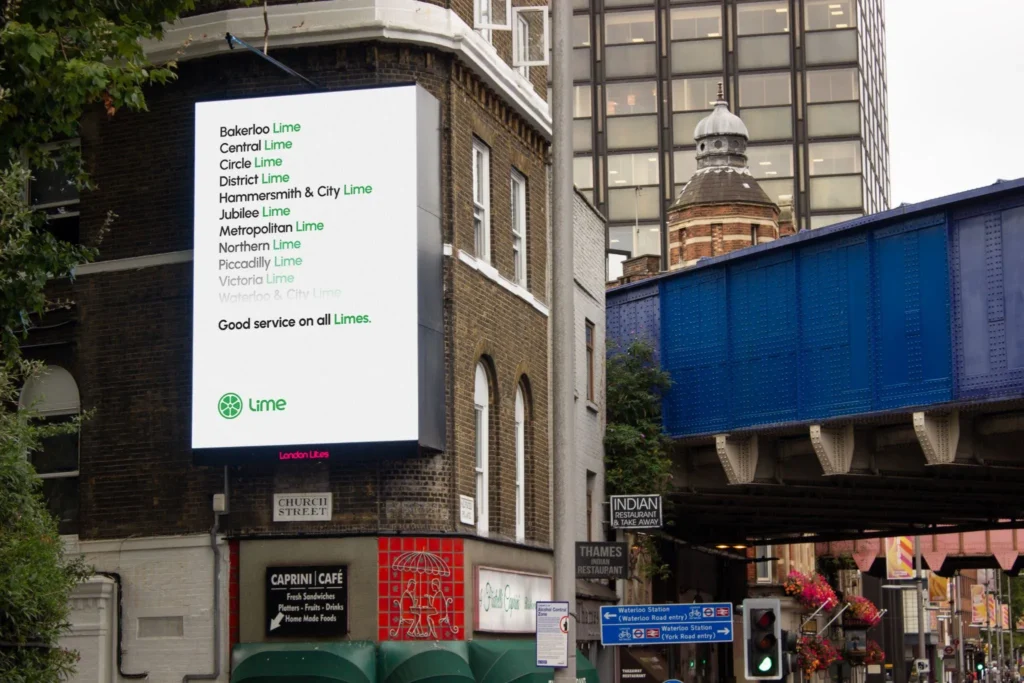
Instead of shouting for attention, they tapped into a shared moment of disruption with the playful headline ‘Good service on all Limes’, a clever twist on the classic Tube announcement. Rolled out in less than 24 hours, the campaign appeared on billboards and digital screens across the city right when Londoners were relying on Lime e-bikes to get around. It didn’t look or feel like an ad, it felt like the city itself speaking. That’s the real power of context-driven marketing: moving from ‘look at us’ to ‘we’re already here’, part of your daily rhythm. The future of brand relevance lies not in being louder, but in being sharper, more integrated and more in tune with the moment.
Taylor Swift – Life of A *Social Media …. Showgirl
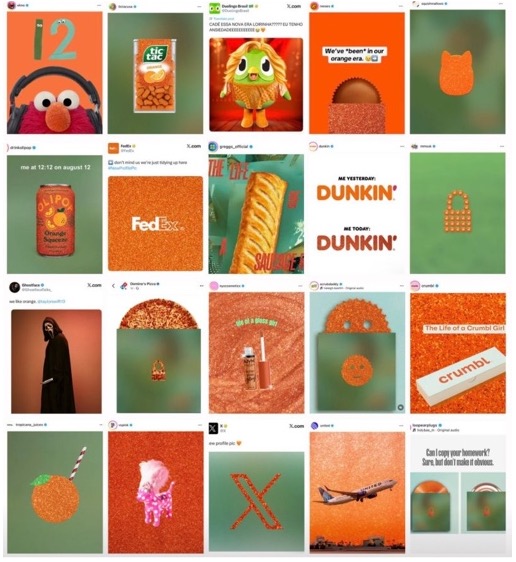
When Taylor Swift changed her Instagram colour, the internet noticed. But what happened next was a perfect case study in reactive marketing gone wrong. Within hours, more than 50 brands had posted orange-themed content in a rush to be part of the moment. No announcement, no deeper meaning, just a colour swap on Taylor’s grid and suddenly Sesame Street, FedEx, Dunkin’ and even airlines were pushing out orange graphics.
This is where reactive marketing shows its weak side. Being first to jump on a trend is not the same as being strategically relevant. Cultural marketing should be about understanding why something matters, not just that it’s trending. It should uncover real points of connection between a brand and a cultural moment, not force-fit a logo into whatever aesthetic happens to be popular that week.
The brands that get cultural marketing right don’t scramble to react to every headline or celebrity move. They choose their moments carefully, making sure the response aligns with their brand story and adds genuine value to the conversation. That’s what makes work resonate.
The Taylor Swift “orange rush” is a reminder that reactive marketing only works when it’s rooted in strategy, not desperation.
Colin the Caterpillar’s 35th birthday – Aldi Left Out
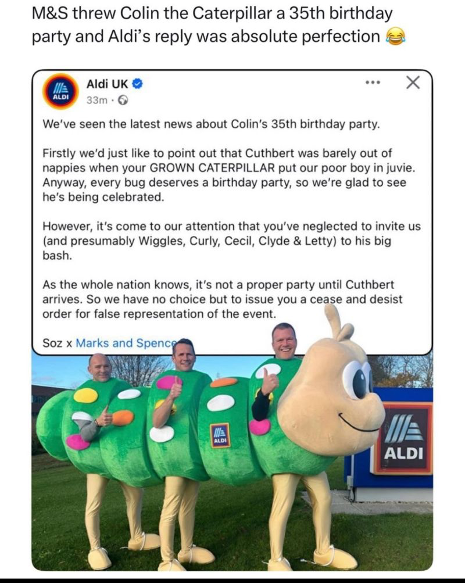
M&S tried to take centre stage with Colin’s 35th birthday, but Aldi promptly stole the show by inviting every other GB caterpillar cake to the party.
Aldi have built a reputation for being fast, sharp and relevant with their reactive marketing. They consistently turn competitors’ campaigns into opportunities, flipping the narrative in a way that feels playful rather than forced.
Their campaigns don’t just grab attention but invite interaction, with comment sections filled with people loving the banter. Aldi has proven time and again that the smartest reactive marketing isn’t just fast, it completely reshapes the conversation.
Astronomer – Trouble in Paradise
A masterclass in damage control and brilliant reactive marketing. The internet exploded with memes, parodies and news articles within hours of the captured moment of the CEO of Astronomer (Andy Bryon) and Kristin Cabot, the company’s ‘Chief of People’ getting caught sharing an intimate moment via Coldplay kiss cam. After seeing the pair hide from the camera, Chris Martin said to the crowd, “Either they’re having an affair, or they’re just very shy”, amplifying the virality of the clip.
In response to the scandal Astronomer hired Gwyneth Paltrow, Chris Martin’s ex-wife, as their temporary spokesperson, to make a tongue-in-cheek video answering Astronomer’s ‘most’ common questions. The video works because it’s a clever spin on the internet outrage. You could say that Astronomer has had a significant win, with its average of 150 likes on social media posts jumping to 64,000 after Paltrow’s video.
Despite the scandal, the virality of both clips won’t have a significant negative impact on Astronomer. It doesn’t directly target their product. Instead, it provides the Astronomer’s marketing and PR team with an opportunity to utilise humour more effectively. After all, they sell data, which might not spark an interest with a wide audience. All-in-all a great example of effective reactive marketing.
Key Takeaway for Marketers
To conclude, the power of reactive marketing can work in your favour; you just have to be clever about it and use it to your advantage and it can make brands more human. Using reactive marketing can look desperate and can sway a brand decision. The challenge for marketers as always is balancing speed and substance.